News & Insight • Weekly Newsletters
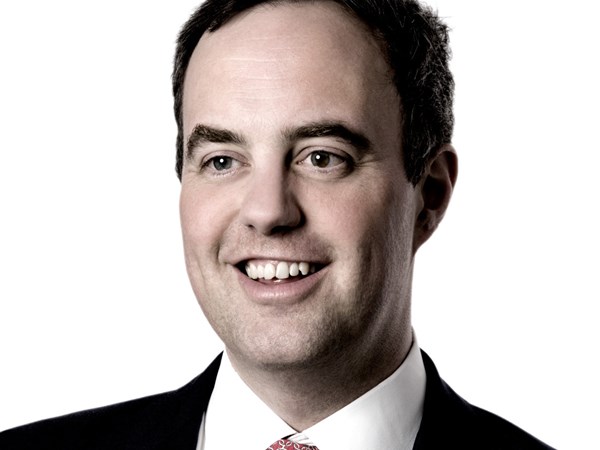
29 May 2026 | William Buckhurst
That Was The Week That Was
MACRO NEWS
Optimism continues that an Iran-US agreement will be reached.
Over the pond, the PCE inflation print was softer than expected, coming in at 0.4% rather than 0.5%, easing concern around the need for rate hikes. Core PCE was up 0.2% (vs 0.3% expected).
May consumer confidence in the US came in lower but better than expected (93.1 vs 92.0 ) and April’s reading was revised up from 92.8 to 93.8. Federal manufacturing outlook was ok but Fed services survey unexpectedly deteriorated (-23.6 vs -13.0) which added to the AI worries. The S&P Case-Shiller house prices index fell for a second month running in March (-0.16% MoM vs -0.10% expected), continuing to lose momentum. ADP’s weekly report of private payrolls showed a healthy increase of 35,750 per week in the four weeks ending 9th May.
The South Korean Index has been the best performing market this year with the KOSPI having doubled. Key constituents Samsung and SK Hynix are up strongly, with the latter surpassing a trillion-dollar size and being up over 1000% in a year.
There continue to be big jumps in Producer Price Indices in Europe. April PPI in Sweden was +4.7% year-on-year from +2% in March; and Spain +8.3% year-on-year from +3.1% last month.
COMPANY NEWS
There were some large moves in the US tech sector as the Nasdaq continues to head higher. Dell shares rocketed up 40% after the company gave an excellent sales guide. This was on the back of the company winning a $9.7bn contract to help the US military handle its licenses for Microsoft software.
Snowflake shares were also up nearly 40% as it reported a stellar start to its financial year, beating product revenue by 5.5%, and raising guidance.
Synopsys shares fell as although the company beat on revenue and earnings plus raised their guidance, the higher debt levels and integration costs of the Ansys integration worried the market. The management seems disciplined leading to good free cash flow.
A lot of push and pull in the Salesforce results. It reported a 50% jump in annual recurring revenue from its suite of AI tools, namely Agentforce (which is also partly powered by models from other AI providers) but it didn’t seem to impact the 7% in line growth.
Mind the Gap. Gap slipped down -15% after it lowered its sales outlook from 3% to 2% due to product mix.
It was reported that Uber has acquired Aspex Management’s stake of Delivery Hero taking its ownership to 36.8% but its voting rights stay at 24.9%
Johnson Matthey, most famous for their catalytic converters, announced in line results and announced the acquisition of Cormetech which makes catalysts for energy supply for data centres. The acquisition added to the confidence of hitting upped guidance.
SSE is a utility that may be in the crosshairs for the current Government but in the meantime their results continue to be good. Sales were slightly ahead with the dividend also being increased by 7%. The company confirmed its outlook, guiding for sales growth of 6%.
Pernod Ricard management expressed their view on the market. “The U.S. market has softened, with bottled spirits at around minus 5% in value, and we are seeing that affordability pressure has become the most persistent challenge. Our view remains that current pressures on the U.S. market are primarily cyclical, but not exclusively so.”
A TALE OF TWO INTELLIGENCES
Barnes & Noble has made an impressive comeback against the dominance of Amazon and plummeting reading rates. A 2025 study found that daily reading for pleasure dropped by over 40% in the last 20 years, with nearly 46% of US adults not reading a single book in 2023. Yet the private equity owned Barnes & Noble run by James Daunt (the English-born founder of the excellent Daunt Books) opened 60 new store across the US in 2025.
This week Daunt caused a stir when he said he had “no problem” stocking AI-written books. This comes during a time of considerable unease around the proliferation of AI into written material. Earlier this year, the novel “Shy Girl” was pulled from shelves by leading publisher Hachette Group after the author was accused of heavily using AI to write it.
THE TEMPORARY MEN
The sudden departure of BP Chairman Albert Manifold just months into the job due to concerns about “governance standards, oversight and conduct,” prompts us to go through the books to see who has equally short-held roles.
Harry Stonecipher was brought out of retirement to return to Boeing as CEO in December 2003 to steady the aerospace company through a period of turmoil. Just 18 months later, he was ousted by the board after an investigation revealed he was having an extramarital affair.
After an 11-year run as Microsoft’s COO, Kevin Turner left to become CEO of Citadel Securities in July 2016. However, after struggling to adapt to the firm's somewhat “unique” corporate culture, it was announced that he was departing the company after just six months.
But the wooden - or perhaps golden - spoon goes to Alan Fishman who took the helm of the ailing Washington Mutual on September 8, 2008, in the throes of the subprime mortgage crisis. Just 17 days later, federal regulators seized Washington Mutual in the largest bank failure in American history, selling its operations to JPMorgan Chase. Despite his brief stint, Fishman was eligible for his $19m severance compensation package.
THE WEEK AHEAD
A data heavy week in the States which culminates in the non-farm payrolls. There are also UK housing figures.
There is a focus on cybersecurity names (e.g. Palo Alto, GitLab) for signals on spending trends, whilst figures from Broadcom and Credo will confirm (or not) AI expenditure. Consumer figures come from Dollar General and Ulta.
THE WEEK IN HISTORY
1971: The United States ended the gold standard, fundamentally reshaping the global monetary system and paving the way for modern fiat currencies.
1995: Amazon sold its first book online, marking the beginning of a new era in e‑commerce and digital consumer behaviour. According to Automateed, Amazon sells c.750-800m books (and e-books) a year.
|
MARKET DATA |
||||
|
Returns |
1 Week |
1 Month |
1 Year |
5 Years |
|
UK Equities (% capital return) |
-0.94 |
1.39 |
18.43 |
39.54 |
|
World Equities (% capital return) |
1.28 |
6.21 |
30.51 |
65.98 |
|
10 Year US Treasury Yield (%) |
4.56 |
4.43 |
4.45 |
1.58 |
|
GBP / USD (fx rate) |
1.35 |
1.35 |
1.35 |
1.42 |