News & Insight • Weekly Newsletters
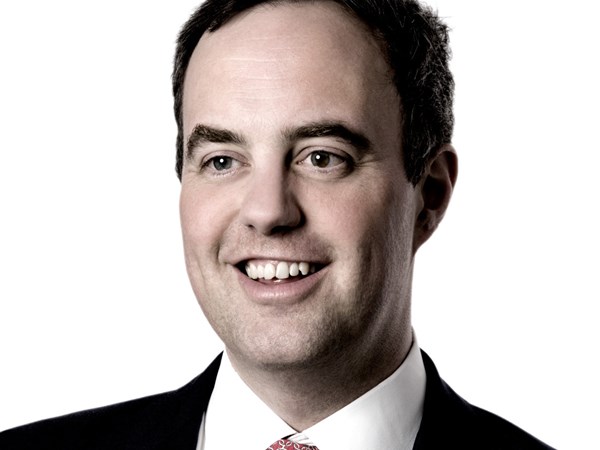
20 February 2026 | William Buckhurst
That Was The Week That Was
MACRO NEWS
President Trump said he was imposing an additional 10% global tariff under Section 122 – and by Saturday this was increased to 15% – a provision that allows the President to impose levies for up to 150 days. The announcement came after the Supreme Court struck down the bulk of his tariffs. Mr Trump said he was “ashamed” of the justices behind the ruling.
New data showed that the US economy grew more slowly than expected in the fourth quarter of last year. GDP grew by just 1.4% on an annualised basis, down from 4.4% in the previous quarter. A slight slowdown on consumer spending and the 43-day government shutdown weighed on growth.
UK CPI dropped to its lowest level since last March, with consumer prices rising 3% in January. The latest figures keep the Bank of England on track for a spring rate cut with markets then pricing in one more quarter-point cut before the end of the year.
Furthermore, there was another weak jobs report in the UK – the unemployment rate reached its highest since the pandemic at 5.2% (and 14% for 18–24-year-olds).
In the US, the Fed Minutes showed that policymakers were in near unanimous agreement to keep interest rates on hold at their meeting last month.
COMPANY NEWS
Occidental Petroleum beat expectations for fourth-quarter earnings as strength in its midstream unit helped it offset weaker crude oil prices. The company said it had reduced debt by $5.8bn since mid-December, bringing its principal debt down to $15.bn following the OxyChem divestiture.
Vulcan Materials, the US aggregates company, finished sharply lower on the week after reporting results that showed quarterly earnings below expectations and the company also guided below expectations.
Cadence Design Systems rose after the chip design software firm reported results that beat analysts’ expectations. Quarterly revenue of $1.44bn was 6% higher than the previous year.
Rio Tinto reported flat full-year profits as weaker iron ore prices offset a boost in production and higher copper prices.
Walmart reported revenue growth of 5.6%. Although at $190.7bn last quarter (and $713.2bn for the full year), they have now been surpassed, for the first time, by Amazon who reported full year revenue of $716.9bn earlier this month.
In its full-year earnings results on Thursday, Nestle said it plans to slim its sprawling portfolio into four divisions: coffee; pet care; nutrition; and food and snacks – while it plans to sell its remaining ice cream businesses. It reported better than expected organic sales growth of 3.5%.
Newmont Mining delivered blowout earnings as it said its average realized gold price surged 45% in 2025, driving 123% earnings growth. However, its guidance left investors disappointed: it said it expects its all-in-sustaining cost (AISC) for the year to spike to $1,680 per ounce from $1,358 per ounce.
OWL IN THE COALMINE?
Further insight this week into how intertwined the burgeoning private credit sector is with insurance funds. Blue Owl, the US-based private credit group that is thought to be particularly enmeshed in the intricate web of private loans to the massive roll-out of AI-datacenters, announced that it is halting redemptions on its inaugural debt fund for retail investors.
Blue Owl moved this week to sell a $1.4bn portfolio of private loans to three major US pension funds and its own insurance subsidiary. The loans were sold at 99.7% of par value.
Moodys estimate that nearly a third of the roughly $6 trillion in cash and invested assets held by US life insurers is allocated to various forms of private credit.
HUNDRED NOT OUT
In a week where Google (Alphabet)’s newly issued 100-year bonds started trading, for those of us who enjoy looking back, we’ve dusted down the record books.
Alphabet sold a £1bn GBP century bond with a 6.125% coupon as part of its plan to spend $185bn this year building out AI infrastructure. The deal came alongside $20bn of additional Google debt issued earlier in the week. Demand ran hot for the so-called Methuselah bond. Alphabet’s century bond lands in the middle of an AI-borrowing boom.
No technology company has issued a century bond since Motorola did so in 1997, back when flip phones ruled and dial-up internet hummed in the background. The speed of disruption makes a 100-year promise feel almost philosophical. IBM, Coca Cola and Disney have also issued 100-year bonds in the past. The Governments of Austria, Mexico and Argentina have also issued 100-year bonds.
Less reassuring is the fact that 90’s retail icon, JC Penney, sold $500m of century-bonds in 1997, only for those bonds to sell for pennies on the dollar 23 years later when the retailer filed for bankruptcy.
THE WEEK AHEAD
A quiet week on the macro front: Japan CPI and US PPI data on Thursday.
The big corporate event this week is Nvidia’s results released on Wednesday evening,
Standard Chartered, Home Depot, and UK student property operator Unite all report results on Tuesday. On Wednesday, its Salesforce, Aena, Wolters Kluwer, HSBC and Diageo. On Thursday, we have Schneider Electric, Rolls Royce, and London Stock Exchange.
THE WEEK IN HISTORY
1898: The US Battleship Maine is sunk near Cuba after hitting a mine. US markets would decline 16% over the next four weeks as fear of war spread and by April the US was at war with Spain.
1933: Michigan declares an eight-day banking holiday as banks struggle to remain open. By early March, 36 states had banks closed.
|
MARKET DATA |
||||
|
Returns |
1 Week |
1 Month |
1 Year |
5 Years |
|
UK Equities (% capital return) |
1.89 |
6.02 |
28.04 |
100.04 |
|
World Equities (% capital return) |
2.56 |
2.42 |
11.45 |
85.61 |
|
10 Year US Treasury Yield (%) |
4.36 |
4.30 |
4.50 |
1.43 |
|
GBP / USD (fx rate) |
1.35 |
1.34 |
1.27 |
1.40 |